
Dailyness
Work and life become stitches

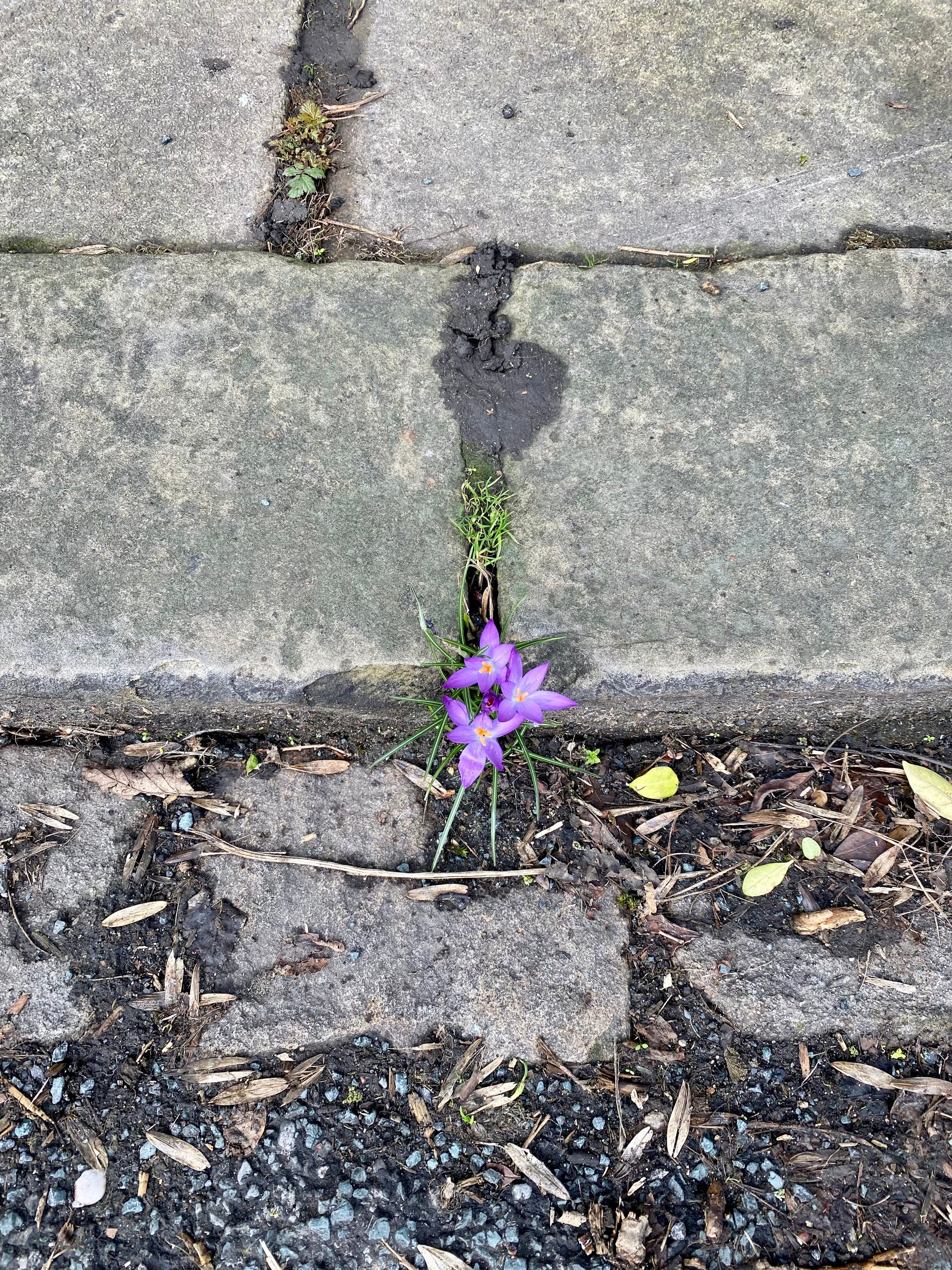
Signs of spring are everywhere suddenly after a heavy, wet winter. Allotment visits have been much reduced, I garden there on clay soil that has been waterlogged and unworkable. I left the perennial plants as habitat over the winter and so that the self seeders can do their work. Lighter days, almost a week without rain, and my self-employment, has allowed the odd extended lunch break at the plot. I’ve been pruning my apple trees, cutting back the herb bed, looking at the little weld, woad and chamomile volunteers emerging in the dye bed. In the back yard at home I cut back ferns finding their new croziers ready to unfurl.
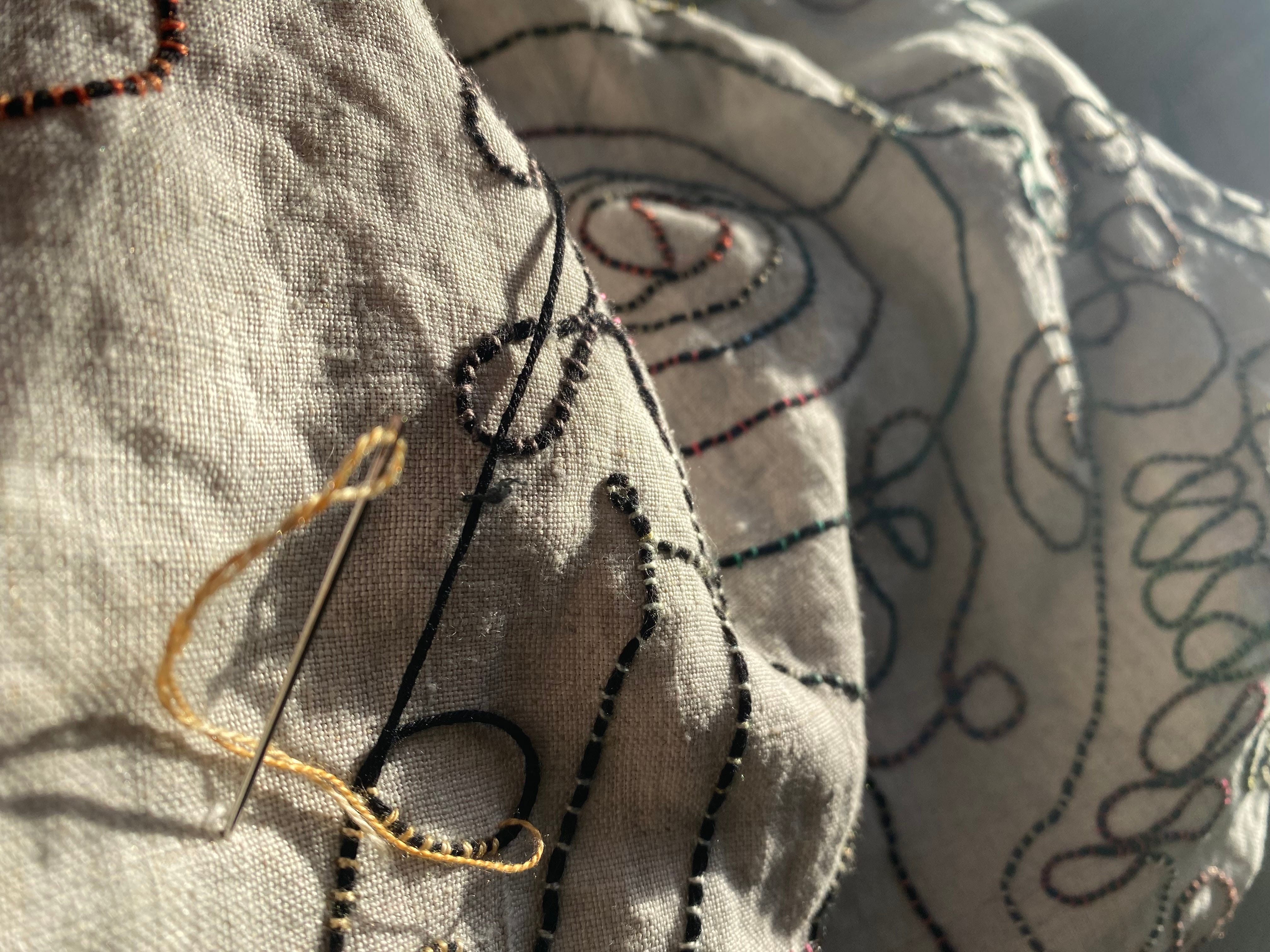
Textile work starts with my current daily practice, a 210m ball of black bamboo thread that I’m couching in a continuous line to a piece of recycled linen using the scrappy ends of balls and spools of coloured thread in my workbasket. As with all repetitive things I’m finding new rhythms and ways of approaching this practice as it progresses. Particularly knotty days demand densely couched patches. When I’m feeling more relaxed the lines I stitch become more open and free. As the bulbs I planted last autumn start to emerge in the pots around my front door I begin stitching leaf-like forms.
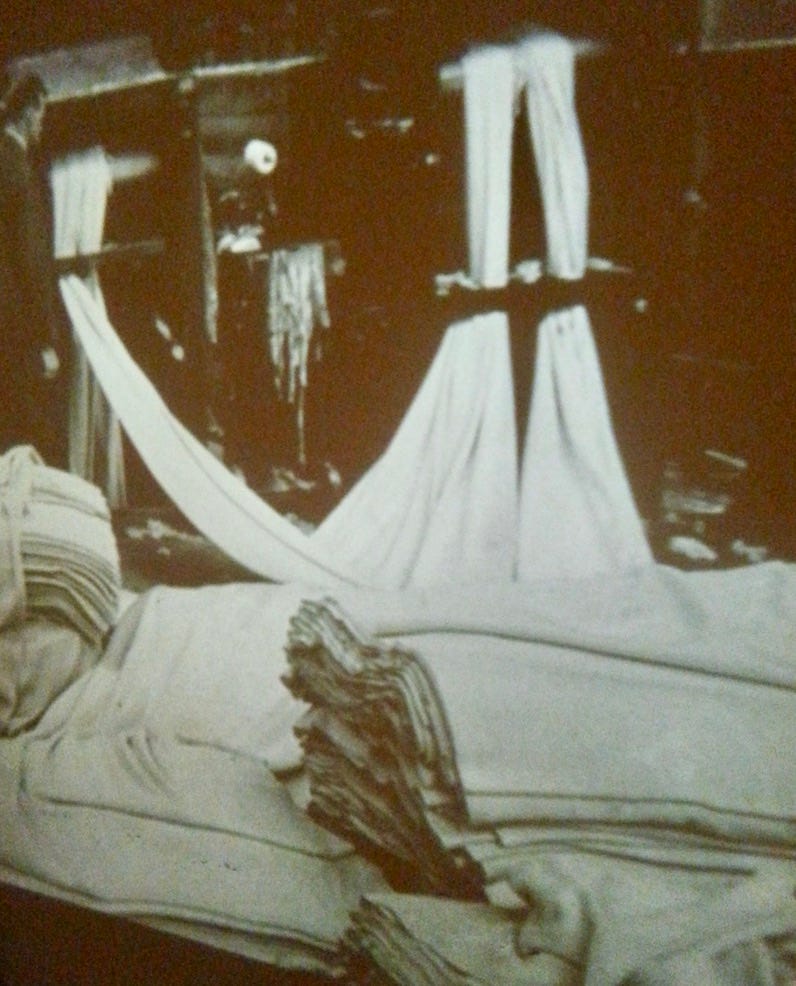
.On the linen, alongside these nods to nature, are to-and-fro loops that speak to a current research interest in flyping - the folding and turning back process used on finished cloth. The image below is taken from slides from the 1950s in the archive of the Society of Dyers and Colourists of a flyping machine in action. The collection of images it comes from show an industry in transformation: black and white capturing the old systems including rusting and dripping pipes in Victorian dye houses and brilliant colour realisations of the new machinery of post-war modernity.
As with most of my pieces of durational work I thread my needle, pick up the cloth and begin. So much of my working life involves planning: funding bids, structures for projects, writing outlines, evaluation frameworks, meetings. Some thinking about these practicalities creeps into my stitching, particularly if I’m dealing with deadlines, but the meandering line offers me space to think differently. The raised strand of the black thread on linen has created a surface that reminds me of something when I run my hand across it. It took a few weeks to work out that the patterns and whorls I’ve stitched feel a little like the surface of the candlewick bedspreads that covered the twin beds in my Grandma’s spare room when I was young.
In Handiwork a contemplative account of the rhythms of an artists life by Sara Baume, daily practice emerges through her writing and making and she says ‘The more I need to explain, the longer the documents become, the larger the assemblages.”1 The stitches I use to measure time have surprised me in the past, my decade of daily stitching Stitch Journal (2013-2023) was nearly 10 metres long when I archived it. I’ve no idea how much more of the 210 metres I have left to stitch and how much time I will have measured by the end of the ball, it will be interesting to find out.


Other things…
It’s International Women’s Day 2026! This week I ran a session at the Brontë Parsonage Museum with the stitching group I’ve worked with there over the last two years. We used recycled scraps to make medals and amulets for women we admire, past and present.
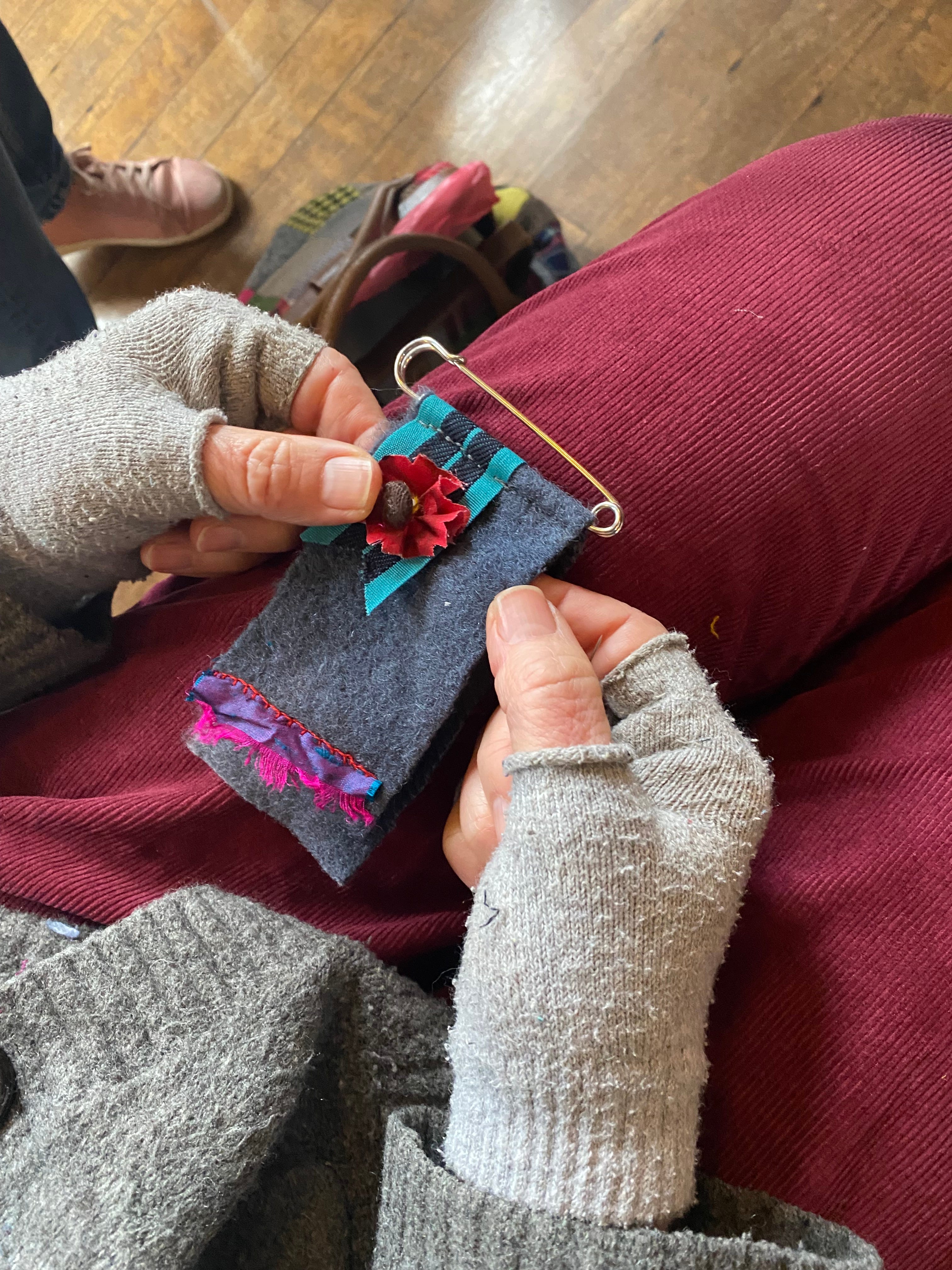
A new offer for paid subscribers starts on Monday 16th March. Stitch with me is an hour on zoom for stitching and conversation once a fortnight 7-8pm UK time. Look out for an email and link soon.
Thanks again for following along and supporting my work.
Sara Baume - Handiwork (Tramp Press, 2020)
Your connection to nature, moods, the daily world is amazing. Very intuitive. I have done daily stitching before, but mostly in the making of slow stitch pieces, never stitching only. I’m trying to pay attention.
Love the meandering of your couching - have only used it in a more linear fashion - need to cut a bit looser!! Thank you.